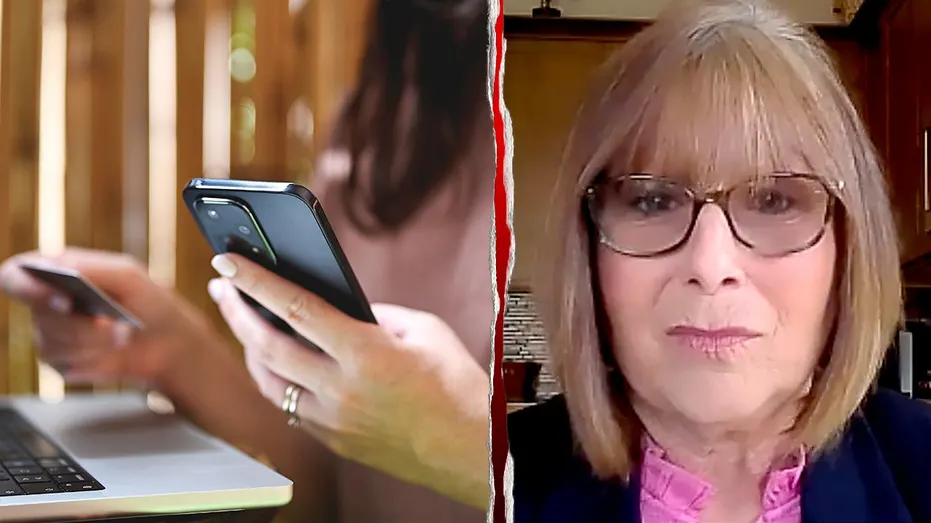
SouthernWorldwide.com – A 70th birthday celebration took a distressing turn for Gail Barr when a deceptive phone call led to a nearly $10,000 cryptocurrency scam, highlighting a growing threat targeting unsuspecting individuals.
The ordeal began with a voicemail from someone identifying himself as Chief Deputy Derek Elmore of the Maricopa County Sheriff’s Office. He claimed Gail had an urgent legal issue tied to court documents from an Arizona judge. When Gail returned the call, the scam escalated, with the caller informing her she had missed jury duty and faced a fine of almost $10,000, with the threat of arrest looming if she didn’t comply.
As a nurse practitioner, Gail was accustomed to handling high-pressure situations. However, the jury duty threat felt different, leaving her confused about the legal processes. This confusion was precisely what the scammers exploited to draw her deeper into their scheme.
The scammer’s approach was sophisticated. He used the names of real local officials and official-sounding titles, including Judge Jennifer Zipes, whom Gail verified was a legitimate Arizona judge. She also found a law enforcement connection for Derek Elmore, making the call seem credible.
Gail was then transferred to an individual posing as Police Captain John Bailey. He provided a badge number and informed her she had been specifically selected for a grand jury case due to her medical background. This detail resonated with Gail, given her career in nursing and as a nurse practitioner, making the fabricated story more believable.
“They said that I was hand-selected by the judge to appear in a grand jury, a medical malpractice case, because of my background in nursing,” Gail recounted. “So that kind of rang a bell that I believed them.” The pressure intensified as the caller alleged Gail had signed a subpoena, failed to appear in court, and was now facing citations for contempt of court and failure to appear.
Scammers masterfully leverage fear and weave in elements of truth to construct convincing lies. This was evident in Gail’s case, where the use of real names and knowledge of her professional background lent an air of legitimacy to the fraudulent narrative. The scammer’s calm and official demeanor further contributed to the deception.
Gail described the call as having “no accents involved” and sounding “totally legit.” Despite a lingering sense of unease, the fear instilled by the threat of arrest compelled her to cooperate. “Something seemed a little weird, I think, but I just kept going because I was frightened,” she admitted, underscoring how scammers capitalize on victims’ fear to bypass rational thinking.
The caller instructed Gail to pay $9,260 through a “federal bonding kiosk.” This seemingly official term referred to a Bitcoin machine located inside a Circle K convenience store. Unfamiliar with Bitcoin and instructed not to contact anyone—”You must stay on the phone the whole time,” the scammer insisted—Gail was isolated and manipulated.
The scammer’s pretext for keeping her on the phone was to ensure she didn’t “skip town.” He also advised her not to disclose the true purpose of the cash withdrawal to her bank, a significant red flag in hindsight. Gail withdrew the money and proceeded to the crypto kiosk, where she scanned a barcode provided by the scammer, which appeared to originate from the Maricopa County Sheriff’s Office.
The process of depositing the cash into the Bitcoin machine was repetitive and exhausting. “We had to do it, like, five different times because there was a limit to how much you could put in at once,” Gail explained. “I was getting very tired. I was so tired.” By the end, she had deposited $9,260, funds she had earned to help cover her son’s medical bills.
Following the transaction, the scammer directed Gail to the sheriff’s department. However, he then claimed a new problem had arisen: a federal citation, demanding an additional $12,000. When Gail stated she couldn’t afford that amount, the demand was reduced to $3,000, and she was sent to another bank. This second bank visit ultimately proved to be her saving grace.
Read more : Earth's Oceans Darkening, Threatening Marine Life: Study
At the second bank, the manager inquired about the purpose of the money. When Gail relayed the scammer’s fabricated excuse, the manager probed further, asking if she intended to give the money to her son that day. Gail’s negative response, coupled with the manager’s suspicion, led him to take her aside and discuss the situation, realizing something was amiss.
Upon understanding she had been scammed, Gail informed her husband and son and contacted a local news reporter. This led her to discover Arizona’s Cryptocurrency Kiosk License Fraud Prevention law, which had recently taken effect. This law provided a pathway for victims like herself to recover their scammed funds if reported within the stipulated timeframe.
Arizona’s law mandates that crypto kiosk operators provide fraud warnings, transaction receipts, daily limits, and refund protections for eligible victims who report fraud promptly. Gail acted swiftly, filing a police report within the 30-day window, contacting the cryptocurrency kiosk company, and reporting the incident to the attorney general. Following these steps, she successfully recovered her money via check, calling it “a good birthday present.”
Crypto ATM scams have become a pervasive issue. Reports indicate that cryptocurrency kiosks were involved in scams leading to over $389 million in reported losses in 2025 alone. Adults aged 60 and older constituted a significant majority of these losses. As of April 2026, 29 states had enacted laws to regulate crypto kiosks, with some, like Indiana and Tennessee, implementing outright bans.
States that have publicly implemented protections, restrictions, or bans on crypto ATMs include California, Connecticut, Arizona, Colorado, Illinois, Indiana, Iowa, Nebraska, Tennessee, Vermont, and Wisconsin. These regulations vary, with some states imposing transaction limits, requiring warning signs, or mandating operator assistance in refunding fraud victims.
Several warning signs could have helped Gail avoid the scam. Real courts do not demand immediate payment over the phone to resolve an arrest warrant, nor do they instruct individuals to lie about cash withdrawals. Furthermore, government agencies do not collect fines through Bitcoin ATMs.
Scammers often exploit readily available public information to make their lies seem more convincing. Their goal is to create an environment of fear, exhaustion, and urgency, preventing victims from thinking critically.
Key warning signs to watch for include any caller demanding immediate payment to avoid arrest. In such instances, it is crucial to hang up and contact the court directly using an official number found on a government website, not the number provided in the voicemail. Similarly, avoid clicking on links sent via text or email, as scammers can spoof phone numbers and create convincing fake websites.
A legitimate court will never demand payment via cryptocurrency, gift cards, wire transfers, or payment apps. Any request to use a Bitcoin machine, especially if it’s referred to as a “bonding kiosk” or “federal kiosk,” should be an immediate red flag. These terms are designed to lend an air of legitimacy to the scam.
Before withdrawing money, it is vital to consult with a spouse, adult child, friend, attorney, or local court clerk. Scammers often insist victims stay on the phone to prevent them from seeking a second opinion. If a caller states you cannot hang up, do so immediately.
If you feel rushed, scared, or confused, seek assistance from your bank. Clearly explain the caller’s instructions to the teller or bank manager, rather than using the cover story provided by the scammer. A law enforcement officer would not advise lying to your bank.
Verify jury duty status directly through your county court website or by calling the clerk’s office. Do not rely on links provided by the caller, as some scammers use fake websites to collect personal information and steal money.
The fact that a caller knows personal details like your name, job, or family information does not confirm their legitimacy. This information can often be sourced from public records, data brokers, or previous data breaches. If personal details are used to instill fear, take a moment to pause and assess the situation before reacting.
Consider using data removal services to reduce the amount of personal information available online. While this won’t erase everything, it can make it more challenging for scammers to construct believable narratives. Such services can help remove your details from many people-search and data broker sites.
If you have already sent money via a crypto kiosk, prompt action is crucial. Documenting the fraud, securing your accounts, and potentially qualifying for state protections depend on swiftness.
In states with refund protections, time is of the essence. Arizona’s law, for example, required Gail to file a police report and contact the kiosk operator within a specific timeframe.
Initiate the process by filing a police report and obtaining a copy or report number. This documentation will be essential when contacting the crypto kiosk company, your bank, your state attorney general, or any consumer protection agency.
Locate the crypto kiosk operator’s contact information on the receipt or the machine itself. Report the fraud directly to the company, providing transaction details, time, location, barcode, wallet address, and the police report number.
File a report with the FBI’s Internet Crime Complaint Center at IC3.gov and the FTC at ReportFraud.ftc.gov. These reports help federal agencies track scam patterns and can serve as official records.
Report the scam to your state attorney general’s office, especially if your state offers crypto kiosk protections or refund policies. This can aid in identifying larger scam trends involving specific kiosk operators.
Preserve all evidence, including receipts, barcodes, voicemails, text messages, and any names provided by the caller. Document the kiosk’s address and transaction times. These details are invaluable for investigations.
After being scammed, contact your bank to secure your accounts. Even if the crypto payment cannot be reversed, banks can assist with new debit cards, password changes, account alerts, and enhanced verification steps. Review recent transactions for any suspicious activity.
Gail’s experience underscores how rapidly a normal day can devolve into a financial crisis. A single fraudulent call and a cryptocurrency transaction nearly cost her $10,000. The most critical lesson is that fear is a scammer’s primary weapon, aiming to isolate victims and make them too embarrassed to seek help. Gail’s recovery was made possible by Arizona’s new law and her swift action, a fortunate outcome, as many victims never recover their losses. The existence of crypto kiosk laws provides a vital fighting chance for those targeted by scams that leverage technology to make money disappear. If you receive a call about missed jury duty, pause before panicking. Legitimate courts do not conduct financial transactions through Bitcoin ATMs.