SouthernWorldwide.com – The housing crisis, a pervasive issue across many regions, might have a solution hidden in plain sight: right in our own backyards.
In 2020, the Almeda Fire devastated the Rogue Valley in Southern Oregon, destroying thousands of homes. This tragedy exacerbated an already challenging rental market, creating a significant housing shortage.
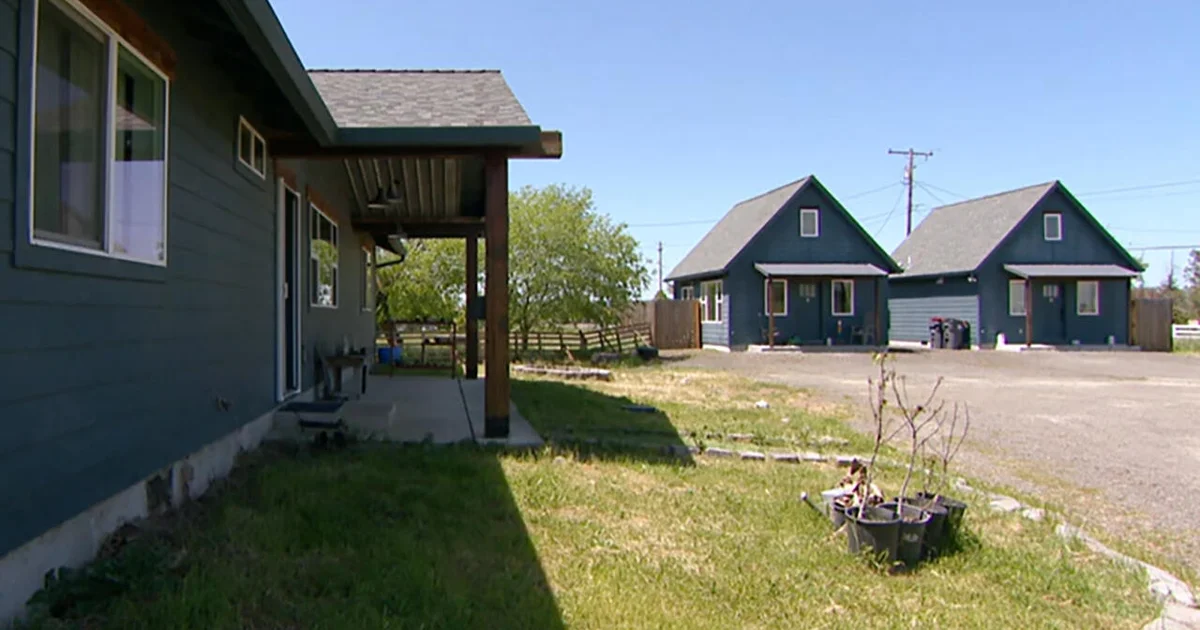
Jacob and Elize Fry, residents of the affected area, were not directly harmed by the fire but were moved to help their community. They secured a loan to construct two small rental units on their property, driven by a desire to provide housing for displaced individuals rather than solely for profit.
These units are known as Accessory Dwelling Units, or ADUs. They are secondary, self-contained homes situated on the same lot as a primary residence, often found in the backyard. ADUs are also commonly referred to as granny flats, carriage houses, or mother-in-law suites.
Recent legislative changes have streamlined the process of adding ADUs, making it faster, more affordable, and legally simpler to build them in many areas. In California, for instance, regulations now permit up to three modest-sized ADUs on a single-family lot, provided they are used for long-term rentals and not short-term vacation stays.
This shift has led to a boom in ADU construction. Dana Cuff, a professor of Architecture and Urban Design at UCLA and a key figure in advocating for these laws, noted that the reforms have had a more significant impact on housing than any other legislation in the past decade. Currently, California has seen the issuance of 82,000 building permits for ADUs.
Cuff herself lives in an ADU built in what was once her backyard, replacing a citrus tree and a children’s treehouse. She acknowledges the loss of some backyard space but emphasizes the greater gains. Her original home is now rented to young tenants, while she resides in the ADU, thoughtfully designed by her husband to optimize the space on their narrow lot.
“Sprawl has hit the wall now,” Cuff stated, highlighting the necessity of building inward rather than outward. She views this as a positive development from environmental, housing, and urban planning perspectives.
Despite the potential benefits, ADUs face opposition from “not-in-my-backyard” sentiments. Critics raise concerns about the strain on existing infrastructure, such as parking, sewer, and garbage services, which were designed for single-family homes. However, for the Frys, the ADUs represented an opportunity to contribute positively after the Oregon fires.
Jacob Fry humorously compared building an ADU to testing a marriage, suggesting it’s a significant undertaking. Their experience proved successful, with their marriage enduring and the ADUs generating rental income that is close to covering their initial investment, even though they rent them below market rates.
“We want things to be affordable so that we can get people in that might not otherwise get a decent situation with a decent landlord,” Jacob explained, underscoring their commitment to affordability.
Elize Fry shared that their current tenants are young newlyweds in their early twenties, highlighting the ADUs’ role in providing starter homes for young families.
While ADUs are compact, thoughtful design can make them feel spacious. Kaetriauna Bowser-Smith, her partner Jared Weber, and their infant daughter have been comfortably living in a 400-square-foot ADU for nearly three years. She mentioned that other available housing options are not comparable to their current living situation.
Without the ADU option, Bowser-Smith believes they might still be living with their parents. This underscores how ADUs can provide independent living solutions for younger generations.
In Los Angeles, 72-year-old Mona Field transformed her garage, previously used for storage, into a two-bedroom ADU for herself. She wanted to avoid aging alone in a large house and found her ADU to be surprisingly spacious and comfortable.
Field’s ADU serves as her retirement home, allowing her to offer her main house as affordable housing to her daughter, Nadine Levyfield, her husband Charlie Marshak, and their two young children. A key question for many in the ADU space is the ability to cohabitate harmoniously on the same property, even with separate living areas.
For Field’s family, the answer has been overwhelmingly positive. Levyfield described regular family dinners, with her mother assisting with childcare. They enjoy shared activities like stroller walks, expressing deep gratitude for their living arrangement.
The traditional ideal of a suburban home with a white picket fence and a two-car garage is evolving. Today, the need for housing often takes precedence over car ownership, and the need for expansive backyards may be diminishing. While ADUs may not be suitable for everyone, they represent a valuable solution in maximizing every square foot of living space and offer a distinct lifestyle for various life stages.
As Professor Dana Cuff aptly put it, “We have to start imagining new ways of living together well.” This sentiment captures the essence of how ADUs can foster community and address housing challenges through innovative living arrangements.
For more info:
- Dana Cuff, professor, Architecture and Urban Design, UCLA
- Accessory Dwelling Units (American Planning Association)
- Building an ADU
Story produced by John Goodwin and Mark Hudspeth. Editor: Ben McCormick.
Read more : Poland Warns Russia, Belarus Using Migrants Against NATO and US
See more:
- What’s an Accessory Dwelling Unit? They may help the housing crisis in Massachusetts
- Piedmont mayor touts ADUs to help solve Bay Area housing woes
- Natomas neighbors take Sacramento to court over proposed tiny homes community
- North Texas builder turns to compact homes to ease affordability strain