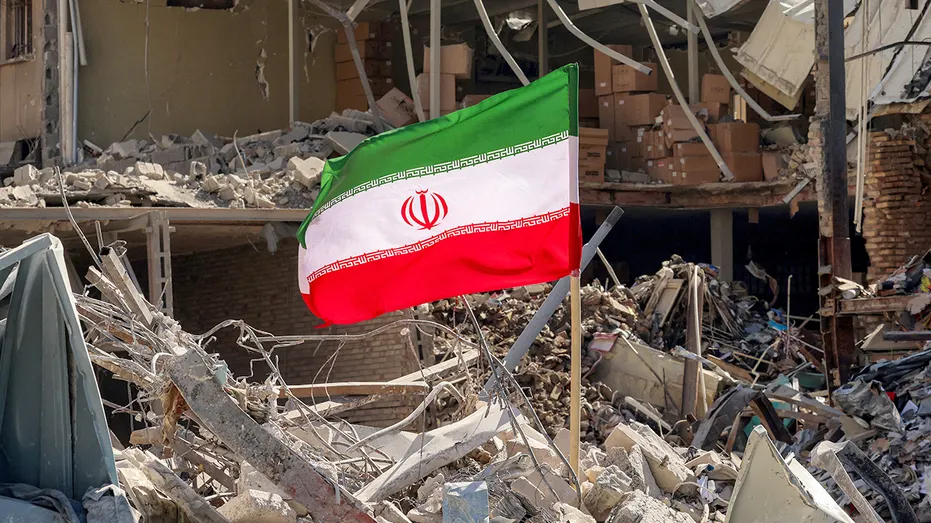
SouthernWorldwide.com – Reports suggest a potential new phase of confrontation between the United States and the Islamic Republic of Iran, making one reality increasingly apparent: the leadership in Tehran still underestimates President Donald Trump’s willingness to move beyond mere pressure and fundamentally alter the regional power balance.
History is not made by those who merely manage crises. It is shaped by those who confront and dismantle the ideologies that spawn them. The 20th century offered a stark lesson: Nazism, fascism, and communism, once seemingly invincible, ultimately crumbled under sustained and determined opposition.
The Islamic Republic of Iran fits squarely into this historical pattern. It is not a state that evolves towards moderation. Instead, it is an ideological system that perpetuates itself through repression, deception, and expansionism.
The origins of this challenge can be traced back to the 1979 revolution, a pivotal moment where a significant misjudgment in Washington reshaped the Middle East. The ousting of Shah Mohammad Reza Pahlavi, America’s staunchest regional ally during the Cold War, created a void. This vacuum was filled not by democratic forces, but by a radical clerical faction whose true nature was neither fully grasped nor rigorously examined. Crucial warnings were dismissed, and the ideological underpinnings of Khomeinism were underestimated, with its foundational texts never seriously studied by policymakers.
FROM HOSTAGE CRISIS TO ASSASSINATION PLOTS: IRAN’S NEAR HALF-CENTURY WAR ON AMERICANS
What followed was not a transition to a new order, but a descent into chaos that solidified into theocratic rule, a system built on absolutism, coercion, violence, and an insatiable drive for ideological expansion.
For decades, successive U.S. administrations attempted to navigate this reality through various means, including engagement, negotiation, and strategic patience. The consistent outcome was the steady proliferation of a destabilizing force across the region. From Iraq to Lebanon, Syria to Yemen, the Islamic Republic meticulously constructed a transnational terrorist network of militias and proxies, effectively creating what is now widely recognized as the “Shia Crescent.” The global war on terror, initiated in 2001 at a tremendous cost, failed to address its central engine of instability.
Then came Donald Trump, who decisively broke this established pattern. He did not seek to manage the Iranian system; he confronted it directly. In doing so, he fundamentally altered the existing power dynamics.
MIKE PENCE: TRUMP AND OUR INCREDIBLE MILITARY ARE ENDING 47 YEARS OF IRANIAN TERROR
Unlike his predecessors, Trump refused to treat the Islamic Republic as a conventional state actor amenable to reform through diplomacy. He recognized it for what it is: the nexus of a transnational ideological project driven by coercion, expansion, and perpetual conflict. His actions reflected this understanding.
The elimination of Iranian Major General Qasem Soleimani was far more than a tactical strike; it represented a strategic rupture in the modern Middle East. Soleimani was the mastermind behind Iran’s regional Islamic terrorist network, serving as the crucial link connecting proxy structures from Baghdad to Beirut. His removal not only disrupted operational capabilities but also eroded the regime’s perceived invincibility and reach.
For the first time in years, the system—essentially a Shia Islamic caliphate centered in Tehran—found itself on the defensive.
TRUMP SQUEEZES IRAN WITH MAXIMUM PRESSURE — WHY IT HASN’T FORCED A BREAKTHROUGH
Trump followed this decisive action with another unprecedented move: designating the Islamic Revolutionary Guard Corps (IRGC) as a terrorist organization. This designation exposed the regime’s core institution for what it has long been in practice—a transnational instrument of ideological warfare, rather than a conventional military force.
Clarity tends to exert pressure on an adversary, while ambiguity allows it to persist. The impact of these actions resonated far beyond Washington.
For millions of Iranians, living under decades of repression, these were not abstract policy decisions. They represented rare moments where American strategy seemed to align with the realities faced by the Iranian people. For many, Trump became a symbol of the potential to break free from the grip of a regime that had held the country hostage for decades.
TRUMP’S LEADERSHIP CREATES ‘RARE OPPORTUNITY’ FOR CHANGE IN IRAN, FORMER IRANIAN POLITICAL PRISONER SAYS
This distinction is not merely semantic; it is strategically significant. However, the narrative is far from complete. Pressure alone does not guarantee resolution. At critical junctures, signals of negotiation, pauses in escalation, and incomplete follow-through introduced ambiguity into an otherwise clear strategy. This provided valuable breathing room for a system that thrives on time. The Islamic Republic has consistently demonstrated its adaptability.
Leadership changes alone do not alter the fundamental structure of the regime. Its ideological core—hostility towards the United States and Israel, reliance on proxy warfare, and internal repression—remains intact. The eventual succession of Ali Khamenei will occur within an institutional framework designed for continuity. Whether authority passes to his son, Mojtaba Khamenei, or another insider, the machinery of control is poised to endure.
This is precisely why partial measures are insufficient. Remove one figure, and another will rise. Strike a facility, and it will be rebuilt. Sign an agreement, and it will be reinterpreted. The system possesses a remarkable capacity to absorb impacts unless something more fundamental is dismantled.
Baca juga di sini: Trump and Xi: Real Progress or Another Chinese Delay Tactic?
IRAN REGIME UNDER ‘IMMENSE PRESSURE’ AMID INCOMING TRUMP ADMIN POLICIES, REGIONAL LOSSES, ECONOMIC WOES
Internally, the regime grapples with mounting pressure. Economic collapse and systemic corruption have become ingrained realities. Environmental stressors are equally severe, and public anger continues to accumulate. The anti-regime uprisings did not vanish; they were brutally suppressed. This is not a sign of stability or legitimacy, but rather a state of compression, maintained by a formidable apparatus of repression and propaganda.
Externally, the pattern is equally consistent. The geopolitical landscape of Iraq, Syria, Lebanon, and Yemen reflects deliberate design, not coincidence. Influence expands where state institutions weaken, and control extends where nations fragment. This is not opportunism; it is doctrine. The Islamic Republic is not a conventional geopolitical competitor; it is a system engineered for confrontation, and it sustains itself through it.
His cooperation with Israeli Prime Minister Benjamin Netanyahu, alongside engagement with key Persian Gulf actors like Saudi Crown Prince Mohammed bin Salman and UAE President Sheikh Mohammed bin Zayed Al Nahyan, signaled a potential reconfiguration of the Middle East. This new paradigm would prioritize stability, economic development, and strategic cooperation over ideological conflict. However, frameworks alone do not alter realities; outcomes do.
IRAN WAR NEARS ‘COMPLETION’ AS TRUMP EYES DEADLINE — WHAT THE ENDGAME COULD LOOK LIKE
Four decades of policy have underscored the limitations of half-measures. Containment merely delays. Negotiation without leverage prolongs the status quo. Pressure without a clear conclusion fails to stabilize anything. The system in Tehran does not seek victory; it seeks survival.
However, transition carries inherent risks. A collapse would likely be disorderly, leading to fragmented networks. Some elements might disappear, while others would adapt. Power vacuums are rarely empty; they often become invitations to further conflict.
The role of international actors, particularly coordinated efforts between the CIA and regional allies, would be crucial in managing such a transition. Simultaneously, a credible national alternative, such as Iranian Crown Prince Reza Pahlavi, could provide a degree of continuity during a period of potential fragmentation.
IRAN REGIME FACES ‘BEGINNING OF THE END’ AS EXILED CROWN PRINCE SEES ‘GOLDEN OPPORTUNITY’
A stable, sovereign Iran, integrated into the international system, would fundamentally reshape the balance of power in the Middle East. This would lead to a reduction in proxy conflicts, strengthen economic ties, and contribute to long-term regional stability. Conversely, the continued existence of the current regime guarantees ongoing instability, conflict, and strategic tension—a system that perpetuates crisis as a survival mechanism.
If Trump successfully completes what he initiated—transitioning from mere pressure to decisive structural change—his legacy would be etched alongside those who dismantled the defining threats of their respective eras. If he falters, this opportunity may once again slip away. The regime of the Shia mullahs will persist, and the cost of its endurance will not be abstract. It will be measured in escalating instability, prolonged conflict, and the continuation of a regime that has profoundly shaped the Middle East for nearly half a century.
For many Iranians, Trump has become a symbol of resistance against a regime they have long wished to see overthrown. Iran now stands at a critical juncture, and so does history. However, crossroads do not dictate outcomes; decisions do.
IRAN REGIME ESCALATES REPRESSION TOWARD ‘NORTH KOREA-STYLE MODEL OF ISOLATION AND CONTROL’
To conceal the extent of its abuses, the Shia clerical regime has imposed near-total internet blackouts and widespread censorship to stifle dissent. Trump has repeatedly highlighted the suffering within Iran and the severity of the repression. Meanwhile, millions within the country remain isolated, silenced, and cut off. When the internet flickers back, even briefly, it feels like a fragile lifeline from a society still striving to be heard. The crucial question remains whether hope can endure.
Trump also recognizes that the Iranian people should not be left to face figures like Gholam-Hossein Mohseni-Eje’i, the head of the judiciary, and IRGC commander Ahmad Vahidi, whose machinery of repression and propaganda continues to operate against the populace until the very end of the regime. This is precisely why Trump’s name carries significant weight in the Iranian public consciousness—regardless of individual support for him, this reality cannot be disregarded.
The leadership in Tehran still appears convinced that Washington ultimately fears escalation more than the regime fears collapse. This assumption may well prove to be the most dangerous miscalculation in the modern Middle East.
If the Islamic Republic continues to test American resolve, the next confrontation may no longer resemble calibrated deterrence. It could very well become the pivotal moment that determines whether Trump’s Iran doctrine was merely a policy of pressure—or the commencement of historic change.
History will not remember pressure alone. It will remember whether that pressure led to lasting change.