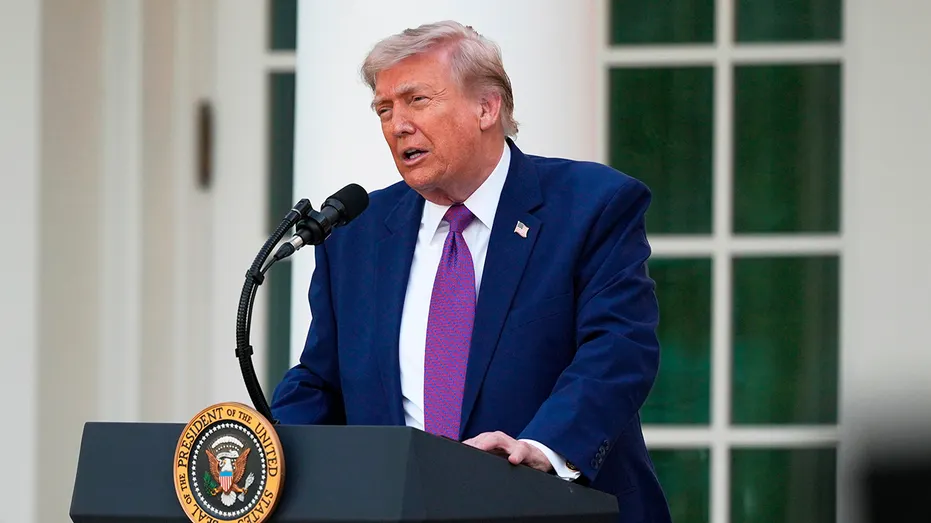
SouthernWorldwide.com – Donald Trump possesses a remarkable talent for navigating controversies, often by employing a strategy of relentless repetition to reshape narratives and survive damaging blunders.
This approach, honed over years in the public eye, allows him to repeat his version of events until it becomes a recognized part of the national discourse, regardless of factual accuracy or initial public outcry.
His ability to persist with a particular narrative, even in the face of overwhelming evidence to the contrary, is a key element of his political survival. This strategy was evident in his handling of events like January 6th, his dealings with Iran, and numerous other situations.
Trump’s rhetoric can shift dramatically, as seen in his contrasting views on TikTok, which he has labeled both a national security threat and a vital societal component. This flexibility in messaging, coupled with repetition, confuses and often solidifies his base.
The assertion that he could shoot someone on Fifth Avenue and retain his supporters highlights the deep loyalty he commands, particularly among his core MAGA followers. This loyalty is often fostered by his consistent messaging, even on controversial topics.
His strategy is akin to a loud voice in a crowded parking lot, using a megaphone to ensure his message reaches everyone, whether they want to hear it or not.
Even when discussing past elections he won, like 2016, Trump continues to assert that the 2020 election was stolen, a claim unsubstantiated by legal challenges and contradicted by his own actions in attempting to influence vote counts.
A recent example of his approach involves his settlement of an IRS lawsuit, which includes a $1.7 billion fund intended for the benefit of January 6th protestors, including those convicted of serious offenses.
During his time outside the presidency, Trump faced four criminal investigations, which, paradoxically, were perceived by many as political persecution, thereby fueling his desire for retribution.
A key moment during his first impeachment involved a transcript showing Trump asking Ukrainian President Volodymyr Zelenskyy to investigate Joe and Hunter Biden. This occurred after Trump had personally ordered a freeze on nearly $400 million in aid to Ukraine.
In the transcript, Trump can be heard saying, “I heard you had a prosecutor who was very good and he was shut down and that’s really unfair.” He also mentioned that “a lot of people are talking about Biden’s son, that Biden stopped the prosecution and a lot of people want to find out about that.”
Despite the gravity of these statements, Trump consistently referred to the phone call as “perfect,” a term he repeated to emphasize his framing of the situation.
The Senate ultimately did not convict him on the impeachment charges brought by the House.
The situation surrounding Iran further illustrates Trump’s evolving rhetoric and his strategy of repetition, even when faced with complex international relations.
At various points, Trump declared that “a whole civilization will die tonight” and then proceeded to extend deadlines, while also dismissing Iran’s responses as “garbage.”
A planned bombing campaign was reportedly delayed due to diplomatic requests from leaders of three Middle Eastern countries.
Regarding the military aspects of the conflict, Trump has repeatedly asserted that the war was over, that Iran’s military capabilities were crushed, and that the U.S. had achieved a decisive victory.
He expressed his views sarcastically on Truth Social, suggesting that even a complete surrender from Iran would be misconstrued by the press as a “Masterful and Brilliant Victory.”
While acknowledging that some negative media coverage is driven by anti-Trump sentiment, the press has also focused on the ongoing challenges, such as dueling blockades and the continued closure of the Strait of Hormuz, as well as Iran’s pursuit of nuclear weapons.
Trump’s focus on this issue was evident as he departed for a summit in China.
When a reporter questioned if Americans’ financial situations motivated his approach to Iran, Trump emphatically stated, “Not even a little bit.” He then elaborated, “The only thing that matters when I’m talking about Iran — they can’t have a nuclear weapon. I don’t think about Americans’ financial situation. I don’t think about anybody. I think about one thing — we cannot let Iran have a nuclear weapon. That’s all.”
This statement, a rare linguistic misstep for Trump, was widely replayed by media outlets and critics, as he chose to repeat the controversial phrasing rather than reframe it.
Despite the backlash, Trump defended his remarks, telling Fox’s Bret Baier, “That’s a perfect statement. I’d make it again.”
This reaction underscores his tendency to double down on his declarations, labeling them “perfect” rather than admitting any regret or misinterpretation.
Even with involvement in foreign conflicts and declining poll numbers domestically, Trump remains fixated on certain issues.
Reports indicate that Trump’s aides have engaged in secret discussions with Greenland concerning a more significant U.S. role on the island, a development that has raised concerns among Greenland’s leaders.
The recurring focus on Greenland highlights a persistent theme in Trump’s foreign policy considerations.
Baca juga di sini: Georgia GOP Faces Runoff in Secretary of State Race Dominated by 2020 Election Issues
Donald Trump consistently generates news and controversy, having dominated the public sphere for a decade. It is highly probable that he will create numerous controversies before Memorial Day, a prediction that itself can be considered a fitting summation of his public persona.