SouthernWorldwide.com – A disturbing new subculture is emerging within America’s digital spaces. Driven by algorithm-fueled online platforms, this phenomenon has a tangible and detrimental impact on national discourse, public policy, and political landscapes.
Individuals known as “influencers” are garnering significant financial rewards, sometimes exceeding thousands of dollars monthly, by glorifying extremist violence and targeting Jewish people. They have become idols for a segment of disaffected young men seeking validation.
This represents the rise of “terrorist fanboys.”
Hasan Piker, a prominent progressive voice with millions of followers, was a top contender for StopAntisemitism’s “Antisemite of the Year” award in 2024, narrowly losing to Candace Owens. His influence extends across the political spectrum.
Piker has made deeply controversial statements, including suggesting that “America deserved 9/11.” He also dismissed evidence of atrocities committed by Hamas during the October 7th massacre, even when the attacks were live-streamed. Piker-hosted streams denied or downplayed Hamas’s sexual violence, with him stating, “It doesn’t matter if f–-king rapes happened on October 7th.” While he later acknowledged his 9/11 comments were “inappropriate,” his stance on mass rapes suggests a disturbing double standard.
Despite these remarks, Piker has appeared at campaign rallies alongside Democratic members of Congress such as Rashida Tlaib and Summer Lee, as well as Michigan U.S. Senate candidate Abdul El-Sayed. Representative Ro Khanna, D-Calif., has even appeared on his Twitch stream. This occurred even after Piker explicitly called for the murder of Senator Rick Scott, R-Fla., a statement he later retracted after a Twitch suspension.
The mainstreaming of Piker’s influence continues, evidenced by a collaboration with comedian Trevor Noah and an appearance on The New York Times’ “The Opinion” podcast. These platforms further normalize his rhetoric, which includes anti-Americanism, antisemitism, and incitement to violence.
On the opposite end of the ideological spectrum is Nick Fuentes, who has engaged in Holocaust denial. He has stated he does not “buy” the existence of gas chambers and referred to the Nazi genocide of Jews as “exaggerated.” Fuentes has cultivated a following through overtly violent language.
During one rally, while speaking about “the Jews,” Fuentes declared, “We’re in a holy war and I will tell you this: Because we’re willing to die in the holy war, we will make them die in the holy war. And they will go down. We have God on our side, and they will go down with their Satanic master. They have no future in America.”
Popular influencer Sneako, whose real name is Nicolas Kenn De Balinthazy, appeared on stage to support Fuentes, proclaiming, “Nicholas J. Fuentes is going to be the future President of the United States of America.” The chilling aspect was the audience’s enthusiastic applause.
Fuentes has also been amplified by mainstream platforms. He appeared on Piers Morgan, who introduced him by stating, “The reason you’re hearing about him is because he’s popular.” Furthermore, he participated in a lengthy interview with Tucker Carlson, who later described him as “smart” and “hilarious,” and asserted that “Fuentes is saying a lot of true things.” Carlson also commented that “Fuentes on some macro level is troubling because, he, his platform is an expression of something that has kind of taken over all political discourse which is identity politics: tribalism.”
Comedians like Theo Von and Dave Smith operate in a similar environment where false, bigoted, and violent statements are framed as “edgy” and “controversial” entertainment rather than genuine threats. The distinction between satire, irony, and outright endorsement is increasingly blurred.
What connects these disparate ends of the political spectrum, beyond antisemitism and incitement to violence, are financial incentives and the pursuit of attention. Online algorithms reward outrage, audiences are drawn to transgression, and young, disaffected men are attracted to those who validate their grievances with the most extreme language.
This dynamic leads to a process of normalization. Ideas that would have once ended careers now serve to build them.
Certain political leaders must cease legitimizing this ecosystem. This entails refusing to campaign or appear with these individuals and explicitly condemning influencers who employ dehumanizing rhetoric, regardless of their audience size.
Cultural institutions need to uphold consistent standards, rather than applying outrage selectively. Platforms must address the role their algorithms play in amplifying extremism under the guise of engagement.
Audiences, too, must recognize their own complicity. In an attention economy, consumption often equates to endorsement.
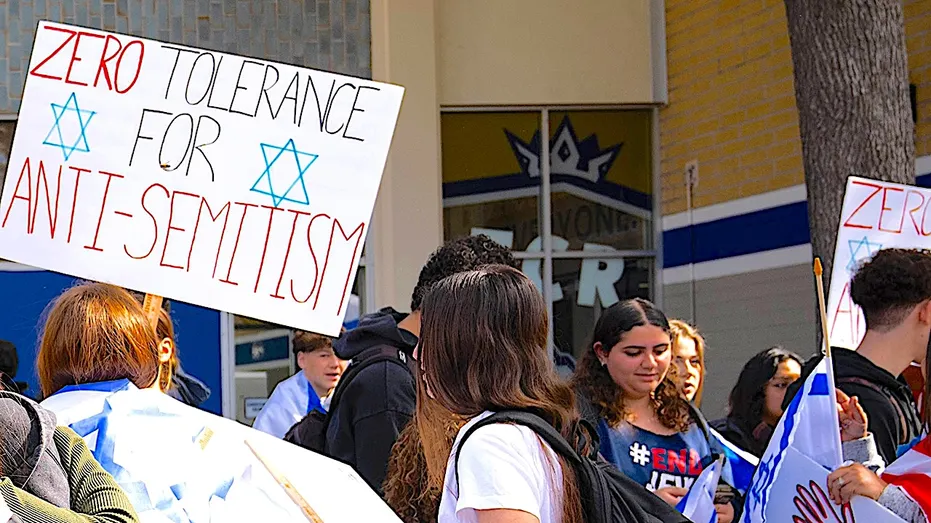
The phenomenon of “terrorist fanboys” is not confined to the fringes; it is actively reshaping discourse and eroding moral boundaries. When violence is glorified and antisemitism is repackaged as commentary, the repercussions extend far beyond any single community.
Baca juga di sini: New Drug Strategy Offers Hope for Aggressive Cancer Patients
This is not solely a Jewish issue; it is a societal one. A culture that learns to admire extremism will not contain it; it will propagate it.