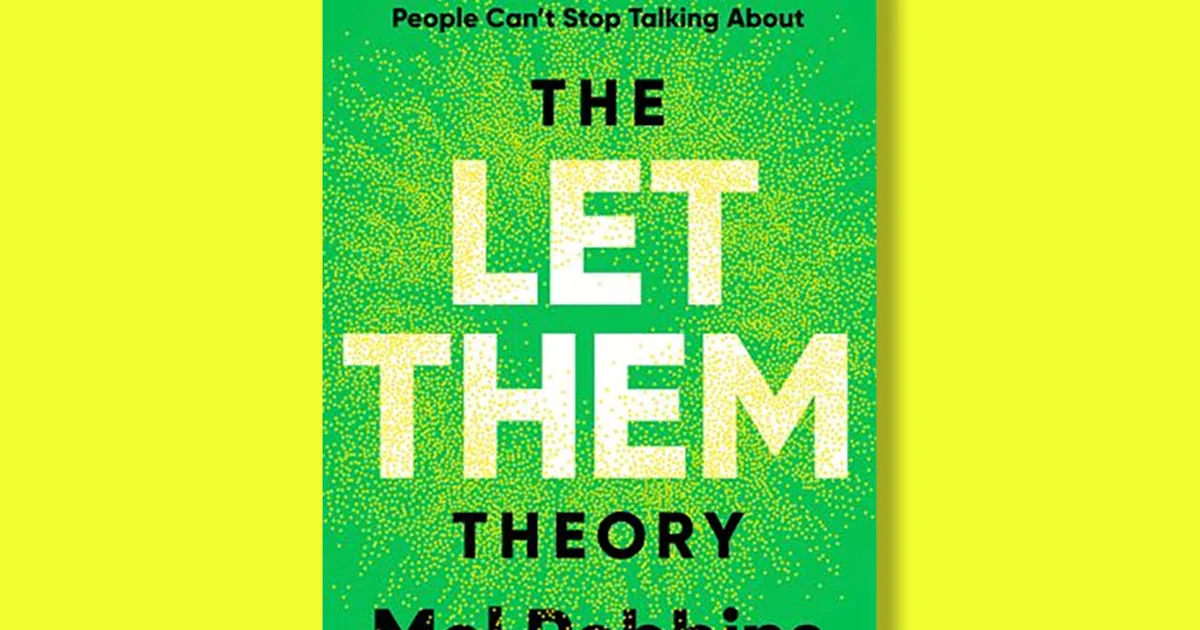
SouthernWorldwide.com – Mel Robbins, known for her impactful podcasts, a viral TED Talk, and bestselling books like “The 5 Second Rule,” is a prominent figure in the motivational speaking world. Her latest work, “The Let Them Theory,” delves into the critical role of personal growth and the necessity of redirecting energy away from uncontrollable aspects of life, particularly the endeavor to change others.
The book, published by Hay House, posits that true personal advancement hinges on relinquishing the need to control external factors, including the actions and beliefs of other people. Robbins’ insights are grounded in extensive research and conversations with leading experts across various fields such as psychology, neuroscience, behavioral science, relationships, stress management, and happiness.
The core premise of “The Let Them Theory” is rooted in a fundamental aspect of human nature: our innate desire for control. Robbins explains that humans are wired to seek control over their environment, decisions, future, and even the thoughts and actions of those around them. This need for control stems from a desire for comfort and security.
However, Robbins highlights a crucial truth: one aspect of life remains perpetually beyond our control—other people. No matter how much effort is exerted, attempting to change another individual is an ultimately futile endeavor. The only person an individual can truly control is themselves—their thoughts, actions, and feelings.
For too long, Robbins suggests, individuals have worked against this natural law by striving to alter people, manipulate situations, and worry about external opinions. This constant struggle creates unnecessary stress, tension, and friction within personal relationships. Robbins admits to having experienced this struggle herself.
“The Let Them Theory” has profoundly reshaped Robbins’ approach to life and interpersonal interactions. By ceasing to resist the natural flow of human behavior and instead embracing it, she learned to redirect her energy from attempting to control the uncontrollable (what others say, think, or do) to focusing on what she could control: herself.
Read more : Beshear's National Role in Democratic White House Aspirations
The outcome of this shift has been a newfound sense of control over her own life. By no longer making other people the source of her problems, her relationships experienced significant improvements. This realization provided a sense of liberation, akin to unlocking a long-sealed door to a life free from the burden of managing others.
The book further elaborates on the theory, outlining practical methods for its implementation and the positive feelings associated with its practice. Robbins also reveals a significant discovery made during her research: “The Let Them Theory” is not merely about “letting them” be. It is a two-part equation, with “Let Them” being the initial step, followed by the equally, if not more, crucial second step: “Let Me.”
The subsequent chapters are dedicated to unpacking both “Let Them” and “Let Me,” exploring the scientific and psychological underpinnings of each component. Robbins then identifies eight key areas of life where the theory can yield the most significant positive impact, including relationships, career, emotional well-being, opinions, stress levels, romantic life, personal struggles, the tendency for comparison, friendships, and most importantly, one’s relationship with themselves.
Throughout the book, readers will repeatedly encounter how their attempts to control the wrong things have inadvertently made other people a source of conflict. Robbins emphasizes that, ideally, other individuals should be a primary source of happiness, support, and love. However, this can only be achieved when the need to control their feelings, words, and actions is relinquished.
By mastering “The Let Them Theory,” individuals can cease expending energy on attempts to control the uncontrollable. This transformation goes beyond mere superficial improvement; it involves a fundamental redesign of one’s entire approach to life, leading to a greater sense of space and freedom to experience life on one’s own terms.
The excerpt concludes with a copyright notice and links to purchase the book, as well as resources for further information about Mel Robbins and her work.