SouthernWorldwide.com – NASA is accelerating its lunar ambitions, having already placed orders for landers, rovers, and drones for a comprehensive moon base mission scheduled for 2028. This development comes less than two months after the successful Artemis II mission, which achieved a record-breaking lunar flyaround.
The space agency unveiled the initial phase of its moon base plans on Tuesday, announcing contracts worth hundreds of millions of dollars awarded to four American companies. These contracts are crucial for acquiring the necessary hardware for the ambitious project.
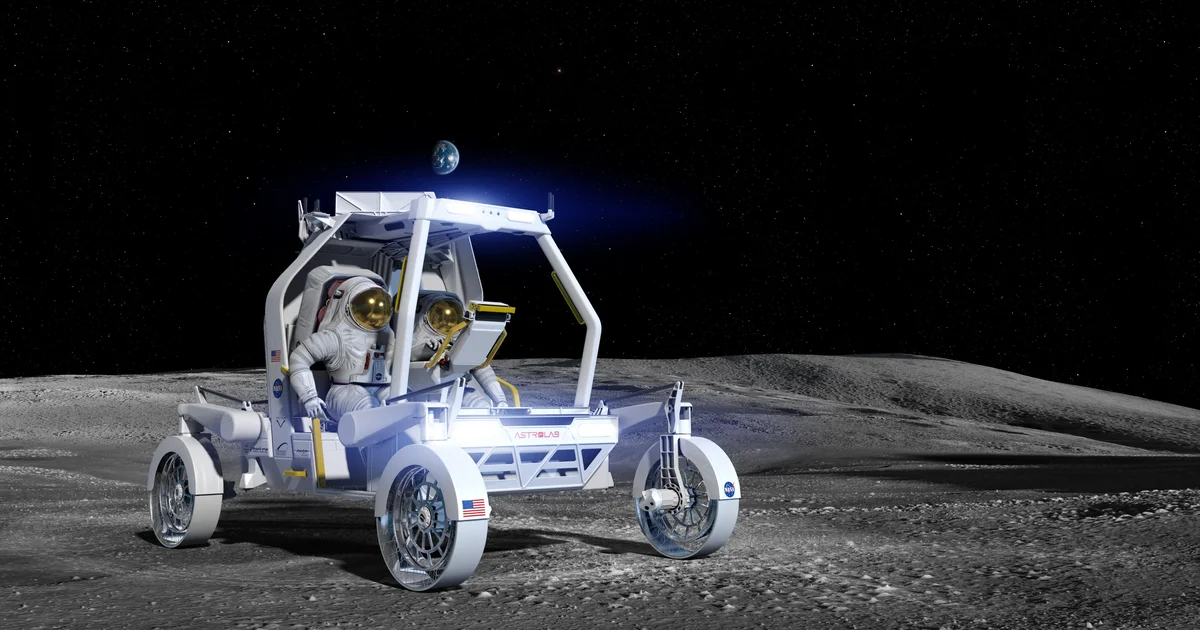
Blue Origin, founded by Jeff Bezos, has been tasked with providing a pair of landers. These landers will be responsible for delivering moon buggies to the lunar surface, specifically in a region near the moon’s south pole. The lunar terrain vehicles themselves will be manufactured by Astrolab and Lunar Outpost.
Firefly Aerospace, a company that successfully landed on the moon last year, will be in charge of delivering the first set of drones to the lunar environment. These drones are expected to play a vital role in reconnaissance and support operations.
The intention is for all this essential hardware to be in place on the moon before the first Artemis astronauts are scheduled to land. This landing is currently planned for as early as 2028, underscoring the urgency and methodical approach of NASA’s lunar program.
During the Artemis II mission in April, four astronauts journeyed around the moon, venturing further into space than any previous crewed mission, including the Apollo missions of the late 1960s and early 1970s. For the upcoming Artemis III mission next year, another team of astronauts will engage in practice sessions for docking NASA’s Orion capsule.
These docking maneuvers will take place in Earth orbit and involve the lunar landers currently under development for crewed missions by Blue Origin and SpaceX, Elon Musk’s company. This preparatory step is critical for ensuring the safety and success of future lunar landings.
The Artemis III test flight, which will include one or two lander dockings in Earth orbit, is conceptually similar to the Apollo 9 mission. Apollo 9, launched in 1969, involved flight tests of a command module and lander in Earth orbit, paving the way for the historic Apollo 11 moon landing just four months later.
NASA is targeting mid-2027 for the Artemis III mission. Following this, a landing by two astronauts is anticipated as early as 2028. This will mark a significant milestone in humanity’s return to the lunar surface.
The second phase of the moon base development, projected to span from 2029 into the early 2030s, will focus on establishing permanent infrastructure. This includes the crucial development of a power grid to support sustained operations.
The full realization of a base capable of supporting astronauts for extended periods in specialized permanent habitats is expected sometime in the 2030s. This will mark the third and final phase of the initial base construction.
“Then we’ll be able to say, ‘Hey, we’re permanently here and we’re not giving it up,'” stated Carlos Garcia-Galan, NASA’s moon base program executive. His words highlight the long-term commitment and vision behind the Artemis program.
Garcia-Galan envisions a moon base that will eventually span hundreds of square miles. To manage and mark the expansive perimeter, a network of drones, codenamed MoonFall, will be strategically stationed at the corners. These drones will provide crucial monitoring and communication capabilities.
These territorial markers are intended to be deployed with respect for any other countries’ spacecraft or equipment that might be in the vicinity. Isaacman expressed his expectation of reciprocity in this matter, emphasizing the importance of international cooperation and awareness in space exploration.
The overarching goal of establishing this moon base is multifaceted. It aims to foster the development of a lunar economy, facilitate groundbreaking scientific research, and crucially, lay the groundwork for future human expeditions to Mars. Isaacman stressed these objectives as key drivers for the program.
The Planetary Society, a prominent space advocacy organization co-founded by the late astronomer Carl Sagan, estimates that NASA’s return-to-the-moon initiatives will have cost approximately $107 billion by 2026, when adjusted for inflation. This figure underscores the significant investment required for such endeavors.
NASA Administrator Jared Isaacman indicated earlier this year that the agency anticipates investing around $20 billion over the next seven years specifically for the moon base mission. This substantial allocation demonstrates the agency’s dedication to achieving its lunar objectives.
Read more : TANVI RATNA: The Iran War's Impact on Europe's Energy Shift Toward America
“For those waiting patiently, the grand return is close at hand and we will not slow down,” Isaacman stated on Tuesday. “We are really just getting started,” he added, conveying a sense of momentum and optimism for the future of lunar exploration.