SouthernWorldwide.com – Archaeologists have made a significant discovery, unearthing traces of a rare purple dye, famously associated with luxury during biblical times, in an unexpected location.
The findings were located at Roman infant burial sites in England.
These graves in York date back to the late third or early fourth century A.D. One infant was interred with two adults in a stone coffin, while another was placed in a lead coffin.
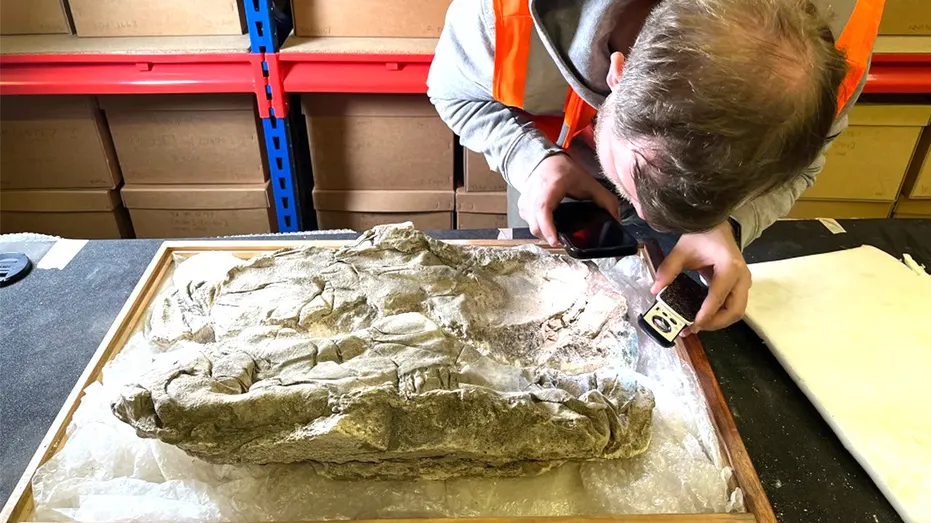
Researchers recently conducted an analysis of the preserved remains and textiles found within these burials. Through chemical testing, they identified the presence of Tyrian purple.
A statement from the University of York on April 30th highlighted that “the babies were wrapped in a fine textile of Tyrian purple embellished with gold thread — a cloth of the highest possible status and luxury known in the Roman world.”
Officials stated that this discovery “suggests the babies were from families of significant social standing,” noting that the purple cloth was “normally reserved for emperors and members of the aristocracy.”
The university further explained that “during the Roman period, the dye was a commodity valued at up to three times the price of gold.”
The dye, which was produced by crushing the shells of murex mollusks, is referenced multiple times in the Bible.
One biblical mention of purple textiles can be found in Acts 16:14, which describes a female merchant named Lydia. She was a seller of purple cloth from the city of Thyatira.
In Mark 15:17, Jesus was clothed in purple by his captors as a form of humiliation, due to the color’s strong association with royalty.
The verse reads, “And they clothed him in a purple cloak; and after twisting some thorns into a crown, they put it on him.”
Authorities explained that the textiles were preserved due to a Roman burial ritual involving “pouring liquid gypsum over the clothed and shrouded bodies of the dead.”
Read more : A'ja Wilson Poised for Dominance as Aces Meet Golden State Valkyries
The release added, “The gypsum gradually hardened, protecting imprints and fragments of textiles, as well as the dyes and substances originally present in the fabrics.”
This discovery marks the “first time traces of the dye have been found on Roman textile remains in York,” according to officials.
The release also noted, “It’s one of only a handful of examples of the dye found in the U.K.”
Professor Maureen Carroll, a project director with the University of York’s Department of Archaeology, described the find as “remarkable.”
Carroll stated, “For the first time we now have confirmation of the use of this costly dye in Roman York, indicating that the city’s wealthy inhabitants had access to expensive and exotic commodities from the other end of the empire.”
The archaeologist further commented that the research “tells us a lot about the importance of children in Roman York and the willingness of the family to give their baby the best possible send-off in tragic circumstances.”
York, known as Eboracum during Roman times, was established around 71 A.D. primarily as a military fortress.
It served as a provincial capital until the Romans largely withdrew from Britain in the early fifth century.
This recent discovery comes approximately a year after the release of research concerning an ancient purple dye factory discovered in present-day Israel.
The site, Tel Shiqmona, has been “unequivocally identified as a specialized facility for large-scale and long-term production of the lucrative purple dye,” according to the study’s authors.
The site dates back as early as 1100 B.C., and researchers reported an “unparalleled” number of artifacts related to purple dye manufacturing at this location.