SouthernWorldwide.com – A prominent Republican senator has publicly urged President Donald Trump to reject any potential agreement with Iran, describing it as a “weak” deal and emphasizing the need to “finish the job” that was started. This comes at a time when administration officials have indicated that negotiations with Tehran are showing signs of progress.
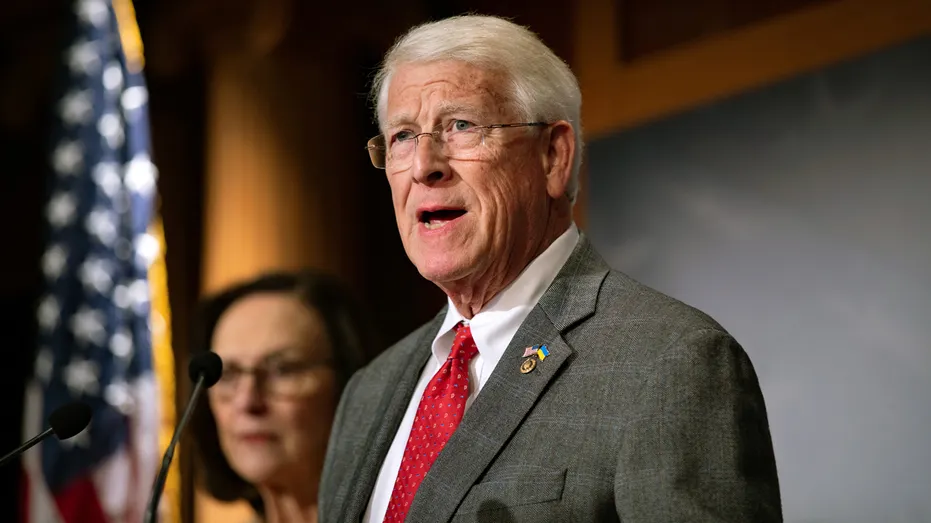
Senator Roger Wicker, a Republican from Mississippi and the chairman of the Senate Armed Services Committee, issued a strong warning on Thursday. He advised Trump against abandoning military pressure on the Iranian regime in favor of diplomatic solutions.
“We are at a moment that will define President Trump’s legacy,” Wicker stated in a press release. “His instincts have been to finish the job he started in Iran, but he is being ill advised to pursue a deal that would not be worth the paper it is written on.”
Wicker further elaborated on his position, advocating for continued military action. “Our commander-in-chief needs to allow America’s skilled armed forces to finish the destruction of Iran’s conventional military capabilities and reopen the strait,” he urged. “Further pursuit of an agreement with Iran’s Islamist regime risks a perception of weakness. We must finish what we started. It is past time for action.”
These remarks highlight a growing divergence of opinion within Republican national security circles. The Trump administration is currently deliberating whether to pursue a negotiated settlement with Iran or to escalate its military campaign aimed at dismantling the regime’s nuclear capabilities.
Wicker’s statement was released just hours after Secretary of State Marco Rubio acknowledged some advancements in the ongoing talks with Iran. However, Rubio also cautioned that no agreement has yet been finalized.
Read more : Experts Astonished by Homer's 'Iliad' Found on Egyptian Mummy
“There’s been some progress,” Rubio commented on Thursday. “I wouldn’t exaggerate it. I wouldn’t diminish it.”
“We’re not there yet,” Rubio added. “I hope we get there.”
Rubio pointed out that several critical issues remain unresolved. These include the disposition of Iran’s stockpile of highly enriched uranium and the question of whether Tehran would be allowed to possess any uranium enrichment capabilities in the future under a potential deal.
“The issue of highly enriched uranium has to be discussed. Its disposition has to be dealt with. And of course, the issue of future enrichment has to be dealt with as well,” Rubio explained.
He also indicated that discussions concerning the Strait of Hormuz are an integral part of the broader negotiations.
These public statements represent one of the most explicit indications to date that diplomatic engagement between Washington and Iran is actively continuing. This is happening despite recent military escalations and concerns about a wider regional conflict.
President Trump himself has recently suggested that he is open to allowing more time for diplomatic efforts before considering further military action.
“If I can save war by waiting a couple of days, if I can save people being killed by waiting a couple of days, I think it’s a great thing to do,” Trump remarked in recent days.
The administration’s diplomatic outreach has been accompanied by intensified mediation efforts in the region. Notably, Pakistan’s army chief, Field Marshal Asim Munir, made a significant visit to Iran. This trip was widely interpreted as part of broader, behind-the-scenes initiatives aimed at de-escalating tensions between Washington and Tehran.
This visit further fueled speculation that Pakistan is playing a discreet intermediary role as negotiators explore potential frameworks to avert additional military escalation.
Despite these developments, Rubio reiterated on Thursday that the negotiations remain precarious and could ultimately fail.
“We’re dealing with a very difficult group of people,” Rubio stated. “It may not” happen.
He also mentioned that Trump “has other options” if diplomacy proves unsuccessful. However, he emphasized that the president still favors “the negotiated option and having a good deal.”