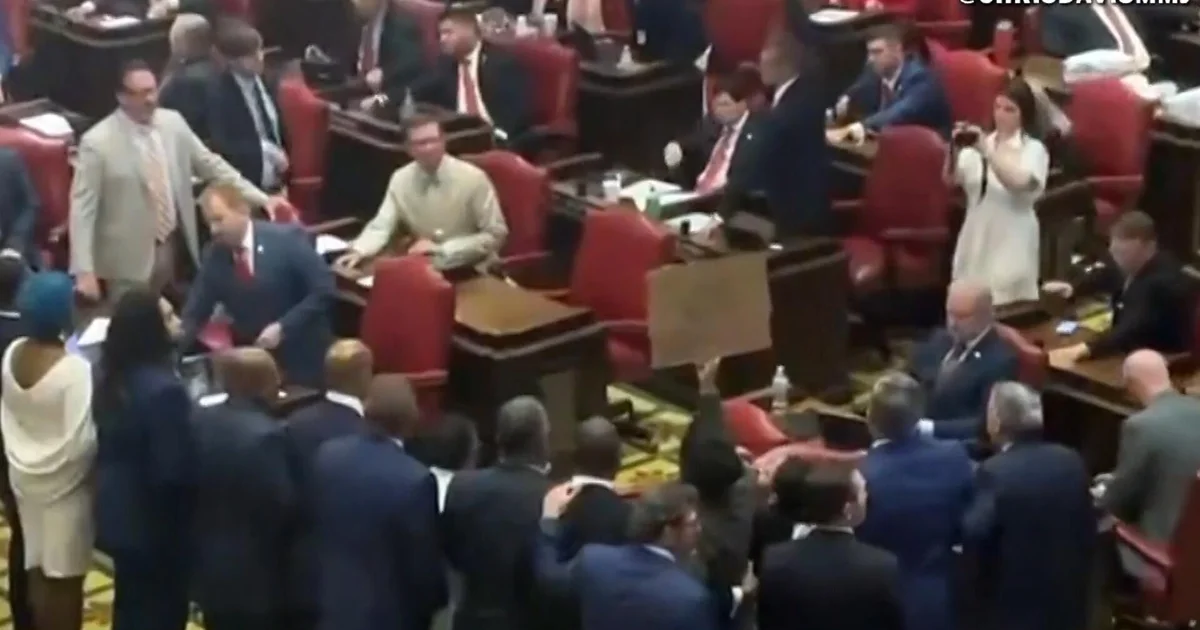
SouthernWorldwide.com – Protests erupted in Tennessee following the state legislature’s decision to break up a congressional district that was majority Black. This move places Tennessee among the latest states to adjust their congressional maps mid-decade, intensifying a national debate surrounding redistricting practices.
The controversial decision by the Tennessee legislature came shortly after a Supreme Court ruling that restricted lawmakers’ ability to consider race when drawing district boundaries. This ruling has national implications for how electoral districts are shaped across the country.
Ed O’Keefe, reporting for CBS News, detailed the events and the national controversy surrounding this mid-decade redistricting effort. The situation highlights the ongoing tension between political considerations and the representation of minority communities in the U.S. Congress.
The redrawing of Tennessee’s congressional map effectively dismantles the state’s only majority-Black district. Critics argue this action dilutes the voting power of Black residents, a practice often referred to as cracking or packing, which can lead to underrepresentation.
This redistricting effort in Tennessee is part of a broader trend in several states where congressional maps are being redrawn, often in ways that favor one political party or alter the demographic balance of districts. Such actions frequently spark legal challenges and public outcry.
The Supreme Court’s recent decision is a key factor in these redistricting battles. By limiting the consideration of race, the court has shifted the legal landscape, making it more challenging to challenge maps based solely on racial disparities in representation.
Moving forward, the impact of Tennessee’s redistricting will be closely watched, as it sets a precedent for how other states might navigate similar challenges in the future. The debate over fair representation and the role of race in redistricting remains a critical issue in American politics.
Protests in Tennessee underscore the deep divisions and concerns surrounding the redrawing of congressional districts. The focus is on ensuring that all communities, particularly minority groups, have their voices adequately represented in government.
The actions taken by the Tennessee legislature are seen by many as a step backward in the ongoing struggle for voting rights and equitable representation. The national conversation is now centered on how to balance political competitiveness with the constitutional mandate of equal representation for all citizens.
The situation in Tennessee is a microcosm of larger national debates about gerrymandering and its effects on democracy. As states continue to redraw their maps, the question of fairness and representation remains at the forefront.
The legal challenges and public protests are expected to continue as the implications of the Supreme Court’s ruling and state-level redistricting decisions unfold. The ultimate outcome will shape the political landscape for years to come.
Read more: The Takeout with Major Garrett
The core issue is whether these redistricting efforts are driven by legitimate political considerations or by a desire to disenfranchise specific demographic groups. The protests in Tennessee reflect a strong public sentiment that the latter may be at play.
The controversy also raises questions about the effectiveness of current laws and legal precedents in protecting minority voting rights. The fight for fair representation is far from over, and Tennessee has become a focal point in this national struggle.
Community leaders and civil rights advocates are mobilizing to challenge the new district maps, arguing that they violate the Voting Rights Act and undermine the principles of democracy. Their efforts highlight the importance of active citizenship in safeguarding electoral integrity.
The long-term consequences of these redistricting decisions could include significant shifts in the composition of the U.S. House of Representatives, potentially altering the balance of power for decades.
As the political and legal battles continue, the events in Tennessee serve as a stark reminder of the vital importance of fair and representative districting for a healthy democracy.
The debate is not just about partisan advantage but also about the fundamental right of every citizen to have their vote count equally and meaningfully.
The calls for accountability and transparency in the redistricting process are growing louder, not only in Tennessee but across the nation.
The role of the judiciary in overseeing these potentially contentious redistricting processes is also under scrutiny, particularly in light of the Supreme Court’s recent intervention.
The ultimate aim of these protests is to ensure that the redrawing of districts reflects the will of the people and upholds the principles of equal representation for all communities.