SouthernWorldwide.com – As the United States approaches its 250th anniversary, history enthusiasts and patriotic travelers have a unique opportunity to step back in time and visit the very locations where pivotal moments in American history unfolded.
These significant destinations, stretching from New England to Virginia, offer a range of immersive experiences, including exhibits that vividly portray the colonial and Federal eras.
Through guided tours, ranger-led programs, and living-history demonstrations, these sites bring the nation’s founding to life for visitors.
The Freedom Trail in downtown Boston is a must-visit, covering approximately 2.5 miles and connecting 16 historically significant sites.
Key locations along the trail include the Old South Meeting House, the Old North Church, and the Paul Revere House.
The trail also features Faneuil Hall, famously known as the “Cradle of Liberty” for its role in hosting patriot meetings and speeches, and the Old State House, the site of the Boston Massacre.
“Preserved and dedicated by the citizens of Boston in 1951, the Freedom Trail is a unique collection of museums, churches, meeting houses, burying grounds, parks, a ship, and historic markers that tell the story of the American Revolution and beyond,” according to the Freedom Trail’s official website.
Independence National Historical Park in Philadelphia is home to numerous buildings and structures crucial to the American Revolution.
Most notably, it houses Independence Hall, where the Second Continental Congress convened and the Declaration of Independence was adopted.
Carpenters’ Hall, a short distance east of Independence Hall, was the venue for the First Continental Congress.
The historic district also encompasses the Museum of the American Revolution, the Benjamin Franklin Museum, and the National Constitution Center.
“The park represents the founding ideals of the nation, and preserves national and international symbols of freedom and democracy, including Independence Hall and the Liberty Bell,” states the National Park Service (NPS) website.
“The Declaration of Independence and US Constitution were both debated and signed inside Independence Hall, a UNESCO World Heritage Site.”
Virginia’s Historic Triangle offers a rich tapestry of historical sites dating back centuries, beginning with Jamestown, established in 1607 as the first successful English settlement in North America.
Colonial Williamsburg, once the colonial capital of Virginia, is now the world’s largest living history museum. It features interpreters in period costumes, restored buildings, and sites frequented by many of the Southern Founding Fathers.
Also part of the triangle is Yorktown Battlefield, the site of the decisive 1781 victory that effectively concluded the Revolutionary War. Williamsburg and Yorktown are situated approximately 13 miles apart.
The Jamestown-Yorktown Foundation provides the America’s Historic Triangle Ticket, starting at $126 for adults, which grants five consecutive days of access to Jamestown Settlement, Historic Jamestowne, Colonial Williamsburg, Yorktown Battlefield, and the American Revolution Museum at Yorktown.
Located about 15 miles south of Washington, D.C., Mount Vernon was the cherished home of George Washington.
Visitors can explore the mansion, the meticulously maintained gardens, Washington’s tomb, a working farm, and museum exhibits that delve into his life, military command, and presidency.
The estate offers expert-guided tours, including exclusive behind-the-scenes access to areas not typically open to the public, alongside immersive exhibits on the Revolutionary War and a recreated Continental Army encampment.
Minute Man National Historical Park, situated in Middlesex County, Massachusetts, commemorates the Battles of Lexington and Concord.
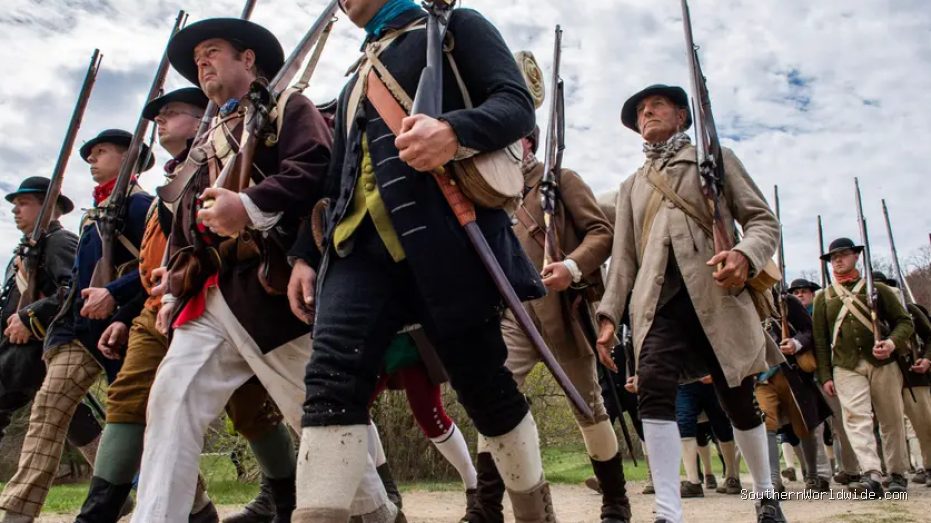
Visitors can traverse the Battle Road Trail, discover restored colonial landmarks such as Hartwell Tavern, and participate in ranger-led programs and Patriots’ Day events that celebrate “the shot heard ’round the world.”
A significant feature of the park is North Bridge, where colonial militia engaged British troops on April 19, 1775, in one of the initial conflicts of the American Revolution.
“This beautifully restored 19th-century commemorative landscape, featuring the famous Minute Man statue by Daniel Chester French, is a perfect place to reflect upon this hallowed ground,” according to the NPS website.