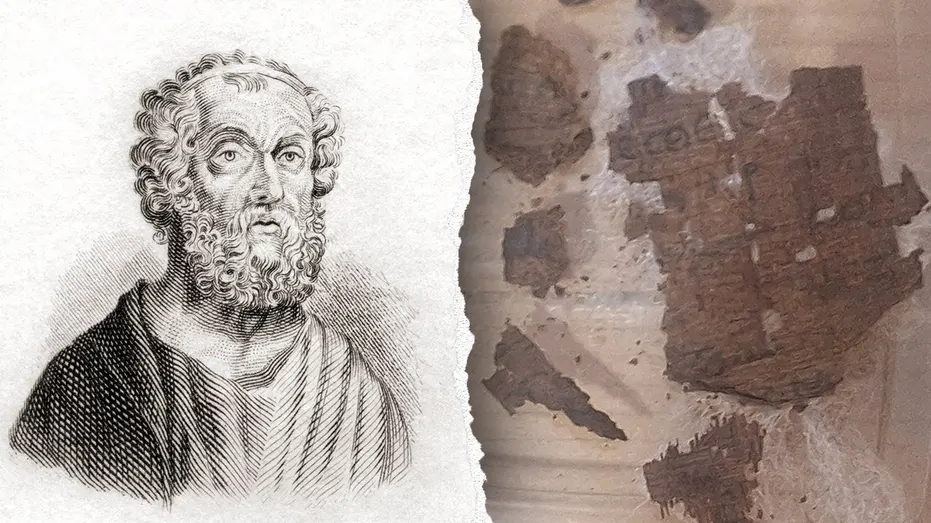
SouthernWorldwide.com – In a discovery that has left archaeologists astonished, a fragment of Homer’s epic poem, the “Iliad,” has been unearthed from an Egyptian mummy. This unprecedented find marks the first time a literary text of such significance has been discovered deliberately placed within an embalming ritual.
The groundbreaking revelation was announced by the University of Barcelona on April 20th. Researchers from the institution made the remarkable discovery while excavating a Roman-era tomb in the town of Al Bahnasa, Egypt.
This specific tomb is situated within the Al Bahnasa necropolis, an area that was once part of the ancient city of Oxyrhynchus. University officials highlighted Oxyrhynchus’s historical importance as one of the most significant cities in Greco-Roman Egypt.
The Oxyrhynchus Archaeological Mission, a project of the University of Barcelona, has been conducting excavations at the necropolis since 1992. The tomb and the mummy within it are estimated to be approximately 1,600 years old.
The “Iliad,” a cornerstone of Western literature, chronicles the events of the Trojan War. The epic poem is believed to have been composed around the 8th century B.C., a millennium before the mummy was interred.
Led by Professor Núria Castellano of the University of Barcelona, the excavation team found that the papyrus fragment was positioned on the mummy’s abdomen. This placement was part of the mummification process, as stated by the university.
The university’s press release noted that previous excavation campaigns by the Oxyrhynchus Archaeological Mission had uncovered papyri in similar positions. However, these previously found documents exclusively contained magical or ritualistic content.
The presence of “a literary text such as the ‘Iliad’ had never before been found in this context,” the university emphasized, highlighting the unique nature of this discovery.
The discovered fragment is from Book II of the “Iliad,” detailing the preparations of the Greek forces for the Trojan War. The text was meticulously identified by papyrologist Leah Mascia.
Ignasi-Xavier Adiego, another professor at the University of Barcelona, underscored the difference between this find and previous ones. He reiterated that earlier papyri discovered in similar contexts were “mainly magical” in nature.
“Since the late 19th century, a huge number of papyri have been discovered at Oxyrhynchus, including Greek literary texts of great importance,” Adiego stated.
He further elaborated on the significance of the find: “But the real novelty is finding a literary papyrus in a funerary context.” This distinction sets the “Iliad” fragment apart from other papyrological discoveries.
During the broader excavation of the tomb, archaeologists also uncovered other Roman-era mummies. These were found within three limestone burial chambers, alongside decorated wooden sarcophagi. The university acknowledged that evidence of past looting was present in the chambers.
Despite the other findings, officials stressed that the Homer fragment was the most significant discovery, emphasizing its exceptional rarity.
“The discovery is exceptional: It is the first time in the history of archaeology that a Greek literary text has been found deliberately incorporated into the mummification process,” the university stated, reinforcing the unprecedented nature of the find.
This remarkable discovery in Egypt follows a series of significant archaeological breakthroughs in the region in recent months.
Just last month, officials announced the unearthing of a massive statue believed to represent a powerful pharaoh frequently associated with the biblical Exodus narrative.
Read more : Bezos's Tax Proposal: Radical Idea or Long Overdue?
Earlier in the spring, archaeologists also reported the discovery of eight Egyptian papyrus scrolls. These scrolls were found alongside a collection of vibrantly colored coffins dating back over 2,600 years.